
Gaming media sites have a problem that most developers don’t confront until the worst possible moment: a match goes to overtime, 40,000 concurrent users refresh the scoreboard, and the API layer falls over. It happened to a mid-sized CS2 coverage site during IEM Katowice 2024, when a map 3 between NaVi and FaZe Clan sent traffic to 6x normal baseline in under 90 seconds. Their monolithic stats endpoint timed out for 22 minutes.
That’s not a capacity problem. It’s an architecture problem. Adding more servers to a broken design just makes the failure more expensive.
What “High-Volume” Actually Means for Esports Stats
A typical Tier 1 Valorant Champions Tour match pulls around 1,500 to 4,000 API calls per minute from a well-trafficked media site. That covers player economy data, round outcomes, ACS updates, and map phase transitions. During a Major grand final, that number can jump past 15,000 calls per minute, with many clients polling every 2 to 3 seconds.
The Liquipedia API, which covers match data across Counter-Strike, Valorant, Dota 2, and over 40 other titles, handles this through a normalized REST architecture with OpenAPI 3 documentation and webhook support for real-time push. That split matters: pull-based REST endpoints for state, push-based feeds for events. Most gaming sites use only one model. The ones that hold up under a major final use both.
How Microservice Decomposition Helps
A monolithic stats API is fine for 200 users. For 20,000, it creates a single failure point and makes it impossible to scale only the components under load.
The reason to break into microservices is that different parts of your stats pipeline have wildly different load profiles. Round-outcome data gets hit constantly during a live match. Historical player stats get queried mostly before and after. Map win probabilities get polled every few seconds. Wrapping all of this in one service means a spike in any area chokes everything else.
A practical decomposition for live match coverage looks like this: a Live Event Service handles round-by-round updates and feeds directly into the WebSocket broadcast layer; a Player Stats Service is read-heavy and benefits from aggressive Redis caching; a Tournament Context Service has low update frequency and is a good candidate for CDN-level edge caching; and a Feed Aggregation Service pulls from upstream providers like Abios or Sportradar and normalizes before distributing internally.
Each service scales independently. When a map 5 Valorant final hits peak traffic, only the Live Event Service needs additional instances.
REST vs WebSocket: Where to Draw the Line
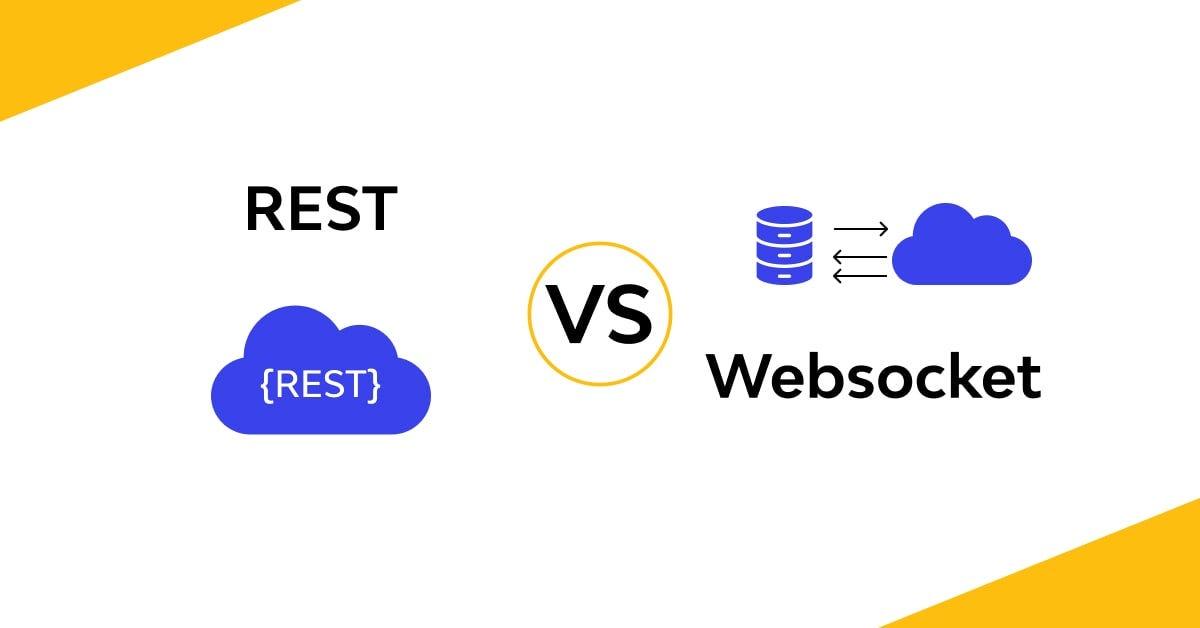
REST is stateless and simple, and it’s the wrong choice as the primary delivery mechanism for sub-5-second stat updates at scale.
A gaming media property covering esports events needs to decide where REST ends and push delivery begins. REST is the right tool for fetching match schedules, retrieving pre-match player profiles, and serving paginated tournament brackets. WebSockets take over for live round states, kill feed updates, economy tracking during active rounds, and anything where you’d otherwise be polling every 2 seconds.
Sites covering tournaments like those indexed on EGW News gaming benefit directly from this hybrid pattern. REST handles initial page load state; WebSocket delivers live deltas. According to Stats Perform’s Match Centre benchmarks published in January 2026, this approach reduces API call volume by 60 to 80 percent during peak match moments. That’s the difference between surviving a major final and not.
Caching: Where Most Gaming Sites Get It Wrong
Standard HTTP caching headers are not enough for live stats. A 30-second Cache-Control header on a live score endpoint is useless when data changes every 15 seconds anyway.
What works is a layered approach. At the application layer, keep current match state in Redis with a TTL matching your update frequency. For CS2 round data, that’s typically 8 to 12 seconds. At the CDN layer, use surrogate keys or cache tags to invalidate specific match data without flushing everything. When round 24 ends, invalidate exactly that match’s cache keys. For non-critical stats like all-time headshot percentages, serve cached data while refreshing in the background.
A March 2024 thread in r/webdev included a detailed write-up from an engineer at a mid-sized esports media company who migrated from polling to event-driven cache invalidation. Their P99 API latency dropped from 1,400ms to 180ms during a live event. The fix wasn’t faster servers — it was eliminating cache stampedes where thousands of clients invalidated the same key simultaneously.
Circuit Breaking When Upstream Providers Fail
When data providers like Sportradar or PandaScore rate-limit your requests, you need a circuit breaker at your aggregation layer. After N consecutive failures, the circuit opens and your service falls back to cached data with a “slightly delayed” flag rather than returning 503 errors. This is how HLTV handles occasional CS2 data gaps: they degrade gracefully to last-known state rather than going blank.
A 5-second upstream timeout threshold and 10 consecutive failures is a reasonable starting point. Tune from there based on your providers’ actual SLA behavior.
Deployment at Scale
Kubernetes is the standard orchestration layer, but the configuration details matter more than the tool. Horizontal Pod Autoscaler rules should target 50 to 60 percent average CPU, not the default 80. The extra headroom means new pods spin up before you’re already degraded. For a gaming media site covering 3 to 5 simultaneous live matches, budget 3 to 6 replicas of your Live Event Service at baseline, scaling to 15 to 20 during major tournament windows.
Sites running this kind of architecture consistently handle Tier 1 esports event traffic without incident. A monolith, no matter how well-resourced, simply cannot do that reliably when 50,000 users are watching the same match.