Open-source code now powers most enterprise applications. While it helps teams build faster, it also introduces security and compliance risks through third-party dependencies. SCA tools help organizations track every open-source component, identify known vulnerabilities, and stay on top of license requirements.
Here are the SCA platforms enterprises are relying on in 2026 to secure their software supply chains.
Why SCA Matters at Enterprise Scale
- Dependency sprawl: a single enterprise application can pull in hundreds of indirect dependencies; manual tracking isn’t viable
- Supply chain risk: compromised packages have become a primary attack vector; SCA is the first line of defense
- License compliance: Using the wrong open-source license in a commercial product carries serious legal consequences
- SBOM mandates: Software Bill of Materials requirements are increasingly demanded by regulators and enterprise procurement teams
1. Aikido Security
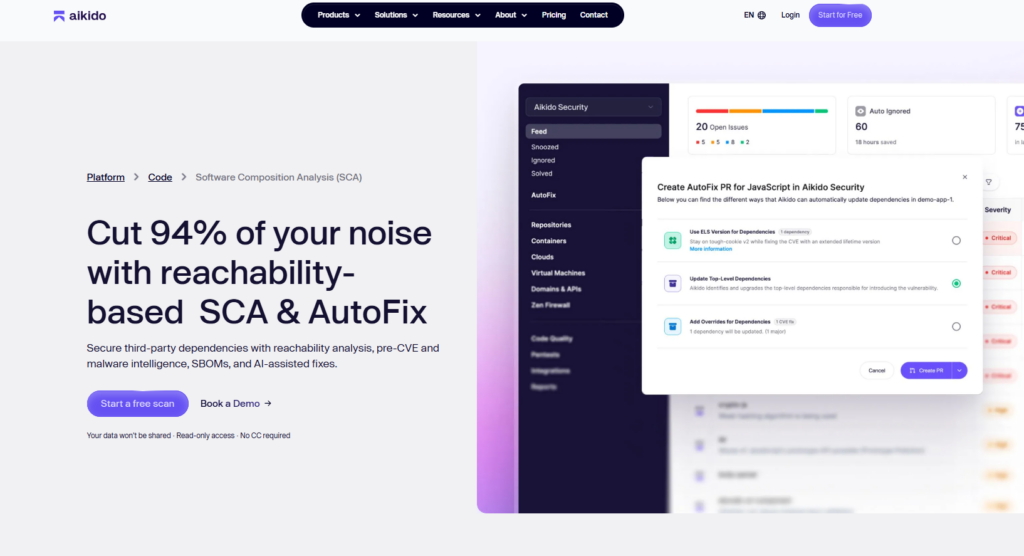
Aikido treats SCA as a practical, low-noise system; filtering out what isn’t really a problem and fixing what is, as part of a bigger platform that covers the full AppSec stack.
Key Features:
- Reachability analysis: checks whether a vulnerable code path is actually used in your app, cutting down on false alarms
- Supply chain attack detection: looks for malicious packages and typosquatting attacks, not just known CVEs
- License compliance scanning: flags license combinations that could create legal problems for your business
- SBOM generation: creates a full Software Bill of Materials on demand for compliance and vendor needs
- AutoFix PRs: creates ready-to-merge pull requests that fix vulnerable dependencies with a safe upgrade path
- Reachability filtering means fewer false alarms than most SCA tools
- AutoFix PRs take the manual work out of fixing issues
- Covers SAST, secrets, IaC, containers, and CSPM in one platform; no tool sprawl
- SBOM generation is built in; no extra tools needed
- Built for developers to use directly; no dedicated security team required
- It’s a newer platform, so some enterprise procurement teams may want a longer track record
Best for: Enterprise dev teams that want reachability-filtered SCA, automated fixes, and supply chain attack detection in one complete security platform.
Snyk
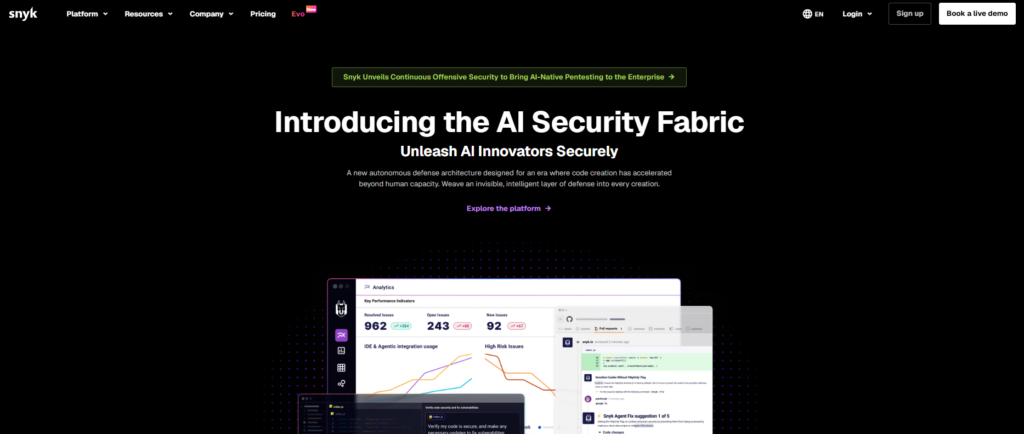
Snyk made its name in open-source security, and its SCA engine is still one of the most developer-friendly around. The Snyk Intel database is large, actively maintained, and the fix advice is unusually clear and actionable.
Key Features:
- Snyk Open Source: strong CVE matching across direct and indirect dependencies, backed by Snyk Intel
- Fix recommendations: specific upgrade paths and patches shown alongside each issue
- License compliance: tracks license risks with configurable policy enforcement
- Container and IaC scanning: extends SCA into Docker images and infrastructure templates
- Great developer experience; IDE plugins flag issues as developers write code
- Clear fix guidance cuts the time between spotting and solving a problem
- Free tier available for smaller teams
- Without tuning, alert volume can be high, leading to developer fatigue
- Enterprise pricing gets expensive at higher usage
- Broader AppSec coverage is thinner compared to all-in-one platforms
Best for: Teams that want top-tier SCA with deep vulnerability data and tight developer tooling.
Mend (formerly WhiteSource)
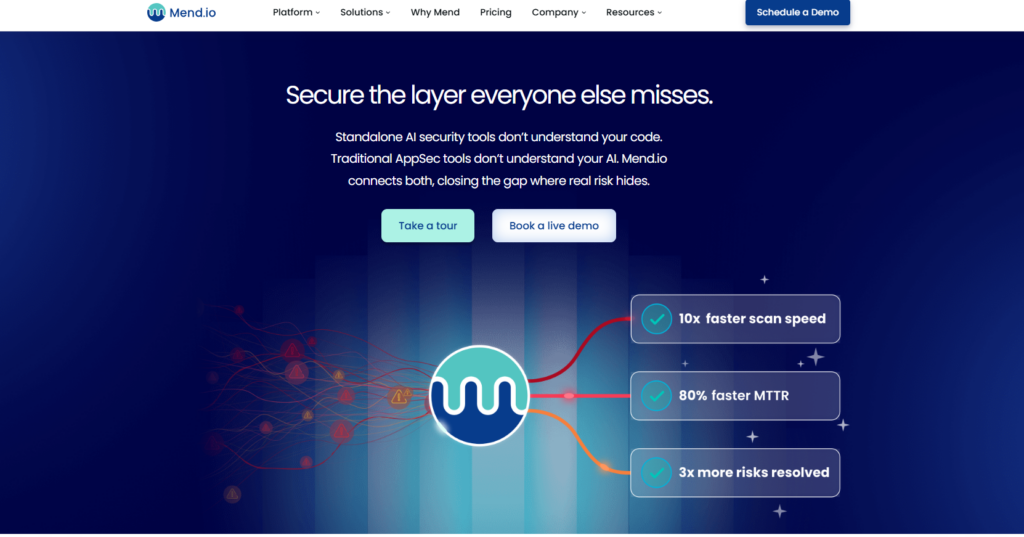
Mend is a dedicated AppSec platform with SCA at its core; especially strong on license compliance and keeping dependencies healthy through its Renovate integration.
Key Features:
- SCA engine: wide dependency scanning across 200+ languages with ongoing monitoring for newly disclosed vulnerabilities
- License policy enforcement: detailed rules to automatically approve, flag, or block dependencies
- Mend Renovate: automated pull requests to keep packages up to date before problems build up
- SBOM generation: CycloneDX and SPDX formats for compliance submissions
- Continuous monitoring alerts teams when new CVEs affect existing dependencies
- Mend Renovate helps prevent dependency debt from piling up in the first place
- Developer experience feels less polished than newer platforms
- Can generate a lot of alerts without careful configuration
- SAST features are less mature than dedicated tools
Best for: Enterprises that need broad ecosystem coverage, strong license policy controls, and automated dependency hygiene at scale.
Black Duck
Black Duck is one of the popular names in SCA, built for organizations where license governance and open-source IP management matter just as much as security.
Key Features:
- Binary analysis: finds open-source components in compiled files without needing source code
- Black Duck KnowledgeBase: one of the largest component databases available, covering millions of packages with vulnerability, license, and risk data
- License obligation management: workflow tools to handle attribution, notices, and approvals at scale
- SBOM generation: CycloneDX and SPDX SBOMs with full component details
- Binary-level detection finds open-source usage that manifest-based scanners miss; critical for M&A due diligence
- Deepest license compliance and obligation management of any tool on this list
- Strong track record in heavily regulated industries
- Pricing is high and usually requires a sales conversation
- Setup is complex; not a quick install
- Developer experience and CI/CD integration are less smooth than modern platforms
Best for: Large enterprises with major IP concerns, M&A activity, or strict open-source governance needs where binary analysis is a must.
JFrog Xray
JFrog Xray is the security layer built into the JFrog Platform; it works natively inside artifact management rather than as a separate scanner. For teams already on Artifactory, it adds solid SCA coverage with very little extra setup.
Key Features:
- Artifact-level SCA: scans packages and Docker images stored in Artifactory at the point they’re stored, before anything reaches production
- Deep recursive scanning: analyzes nested dependencies inside compiled binaries, Docker layers, and packaged archives
- Policy and blocking: stops artifacts from being promoted or deployed based on vulnerability severity or license type
- SBOM generation: on-demand SBOMs for any artifact or build with full dependency details
- Native Artifactory integration means no extra tooling for existing JFrog users
- Artifact-level blocking is a strong enforcement control that most other SCA tools don’t offer
- Wide package type support, including Helm, Conan, and niche ecosystems
- Most valuable for existing JFrog Platform customers; less compelling as a standalone tool
- Developer-facing experience is less polished than developer-first platforms
- Reachability and contextual analysis are less mature than competitors
Best for: Enterprises already using the JFrog Platform that want artifact-level SCA and policy enforcement without adding a separate security toolchain.
Conclusion
SCA is no longer optional for enterprises shipping software in 2026. Supply chain attacks are growing, SBOM requirements are spreading, and dependency graphs keep getting more complex.
Aikido is the only platform on this list that combines reachability-filtered SCA, supply chain attack detection, automated fixes, and full-stack AppSec coverage, making it the strongest single investment for enterprise teams serious about open-source risk.