
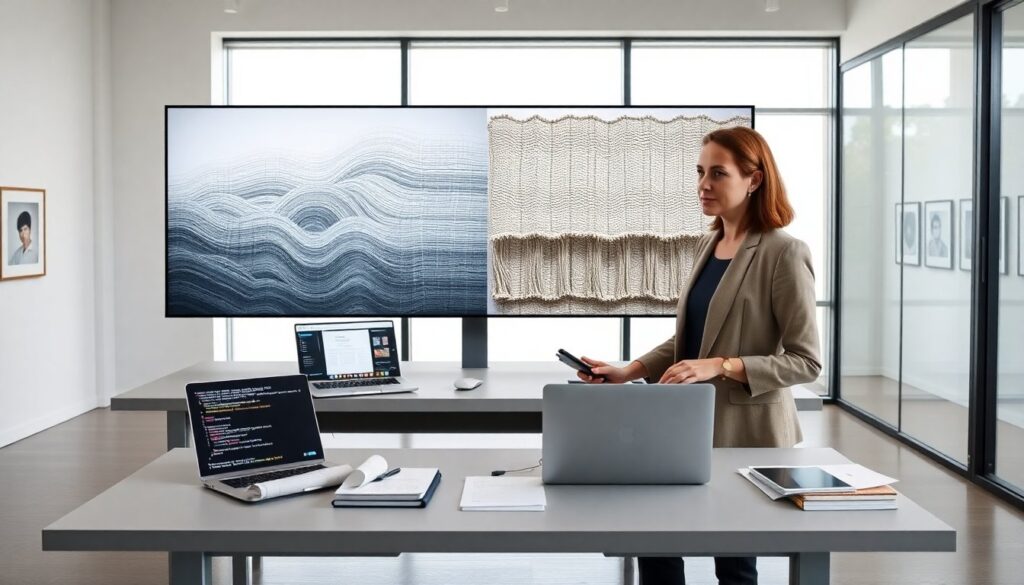
Web by Pyrthalia Zolnor appears as a focused online portfolio and gallery. The site displays interactive pieces, commissions, and process notes. It serves artists, curators, and web visitors who study visual web art. The layout uses clear navigation and fast loading. The pages link to development by pyrthalia zolnor, high-resolution images and short essays. The introduction below outlines background, signature works, and how to engage with the web content.
Key Takeaways
- Web by Pyrthalia Zolnor showcases a unique online portfolio blending code and visual art to create interactive, kinetic pieces.
- The site emphasizes transparency by providing process notes, high-resolution images, and technical details to engage artists, curators, and researchers.
- Zolnor’s work integrates algorithmic forms with hand-made textures, focusing on low-latency interactions and simple controls for an intuitive user experience.
- Visitors are encouraged to explore, cite, and share works easily with recommended citation blocks, embed codes, and downloadable resources.
- The portfolio documents the evolution of projects through archives, newsletters, and public code repositories, fostering ongoing study and replication.
Artist Background, Influences, And Creative Philosophy
Pyrthalia Zolnor grew up near coastal towns and studied visual media. She learned coding and painting at an art school. She then joined collaborative studios and ran public workshops. The web by Pyrthalia Zolnor lists education, residencies, and past exhibits. The page names mentors and shows clear lineage to experimental web artists and kinetic sculptors. The artist cites few formal manifestos and prefers short statements about craft.
Zolnor uses code as a painting tool. She writes small programs that move pixels and sound. She mixes hand-made textures with algorithmic forms. This method shows in her portfolio. The web by Pyrthalia Zolnor emphasizes process. It offers sketches, screenshots, and short log entries. The entries show iteration and choices. They help viewers see how a static image grew into an interactive piece.
Her influences include mid-century textile designers and early net art. She credits a handful of early web collectives that explored browser limits. Zolnor adapts those lessons to modern devices. She prefers low-latency interactions and simple controls. The web by Pyrthalia Zolnor documents these priorities with technical notes. The notes explain frameworks, file formats, and accessibility steps. They show she values clarity in both art and code.
Signature Projects And Key Works With Visual Analysis
The portfolio lists five signature projects. Each entry shows images, interactive demos, and short analysis. The first major work, “Tide Loom,” layers generative patterns over photographs. The visual result blends organic motion with grid structure. The web by Pyrthalia Zolnor hosts a live demo that runs smoothly on modern browsers. The demo uses canvas rendering and lightweight audio synthesis.
A second notable project, “Signal Orchard,” presents a grid of animated nodes. Each node reacts to mouse input and ambient sound. The grid forms emergent shapes and then collapses into calm states. The web by Pyrthalia Zolnor provides both a video walkthrough and a code snippet. The snippet shows how she balances randomness with constraints.
A third project, “Atlas of Quiet Threads,” pairs textile scans with minimal interaction. The piece invites slow exploration. The visual palette favors muted tones and tight patterns. The web by Pyrthalia Zolnor offers high-resolution zoom and descriptive tags for each textile fragment. The tags include origin, stitch type, and year.
Across these works, Zolnor favors scale shifts and tactile detail. Her compositions often place a small interactive element inside a large still image. This contrast draws attention. The web by Pyrthalia Zolnor uses subtle motion to guide the eye. The site keeps captions short and descriptive. The visual analysis pages avoid jargon and state clear goals for each work. They also list exhibition history and technical credits.
How To Experience, Cite, And Share Pyrthalia Zolnor’s Web Work
Viewers can experience the site on desktop and mobile. For best results, they should use a modern browser and enable sound. The web by Pyrthalia Zolnor offers keyboard navigation and descriptive alt text. It also includes download options for press images and a media contact.
To cite a work, the site supplies a recommended citation block for each piece. The block uses artist name, title, year, media type, and URL. The web by Pyrthalia Zolnor asks scholars to include access date for online pieces. It also suggests a short caption for exhibition labels.
To share a work, the site provides social links and an embed code for interactive demos. The embed code uses an iframe with minimal dependencies. The web by Pyrthalia Zolnor permits noncommercial embeds with attribution. For commercial use, the site lists licensing steps and contact details.
Curators and educators may request high-resolution files. The site has a simple request form that asks for project use, venue, and dates. The web by Pyrthalia Zolnor responds with terms and delivery timelines.
Researchers can access technical notes and code repositories. The site links to public version control and to short essays that explain algorithms. The web by Pyrthalia Zolnor encourages replication and study. It also marks which portions of the code remain proprietary.
Fans can sign up for a newsletter and for occasional studio updates. The newsletter highlights new works, upcoming shows, and selected process notes. The web by Pyrthalia Zolnor keeps archive pages that record past versions. These archives help trace the evolution of individual projects over time.