
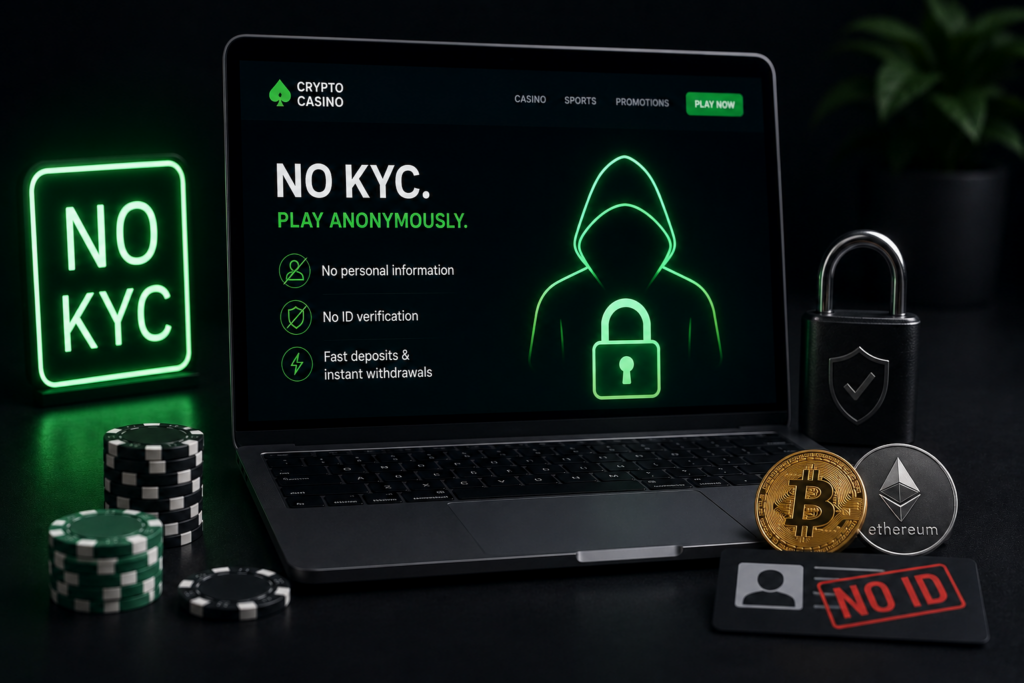
KYC compliance has gotten a genuine engineering upgrade in the last couple of years. API-first identity verification, automated document checks, real-time risk scoring, the kind of infrastructure that turns a process that used to take days into something that runs in the background of a signup flow. That progress is real, and it's made onboarding faster and less painful across fintech generally.
Online gambling platforms sit in a strange corner of this trend, because a meaningful chunk of the industry markets itself as having no KYC process at all. That claim deserves the same scrutiny any compliance system would get from an engineering perspective, because "no KYC" almost never means what it sounds like, and the gap between the marketing claim and the actual system behind it is exactly the kind of thing worth breaking down technically.
What "No KYC" Actually Means at the System Level
In practice, a genuinely no-verification platform, meaning zero identity checks under any circumstance, is rare, and for good reason. Most jurisdictions with any licensing framework impose AML obligations that require some verification trigger to exist somewhere in the system, even if it's not exposed to the user at signup. What actually varies platform to platform is where that trigger sits and how transparently it's documented.
A well-built system publishes its actual thresholds. Verification kicks in above a specific withdrawal amount, or after cumulative deposits cross a defined line, and that logic is stated in the terms rather than left as a black box. A poorly built system, or one built deliberately vague, leaves that trigger entirely discretionary, meaning the operator can request documents whenever it wants, framed as "at operator discretion" or "for security reasons," with no defined threshold a user can check their own behavior against. That's not a KYC system, technically speaking, it's a verification system with no published API contract, and users are left guessing at the rules until the moment those rules get invoked against them.
Ambush KYC Is a Specific, Identifiable Failure Pattern
There's a well-documented pattern in this space that deserves to be named precisely rather than described vaguely. A platform markets itself loudly as anonymous or no-KYC, processes weeks or months of normal deposits and small withdrawals without friction, then triggers a full identity verification request the moment a withdrawal crosses some undisclosed line. Functionally, this is a bait-and-switch built into the compliance architecture itself: the system was never actually no-KYC, it was no-KYC below a threshold nobody published, and the marketing simply omitted that detail.
This matters from a systems design standpoint because it's avoidable. A properly engineered verification flow can absolutely support genuinely light-touch onboarding while still meeting AML obligations, provided the thresholds are published upfront and consistently enforced rather than invoked selectively. The difference between a legitimate light-KYC system and an ambush-KYC one isn't whether verification exists somewhere in the pipeline, every licensed operator has some version of it. It's whether the trigger conditions were disclosed before the user needed to rely on the platform's honesty about them.
Wallet-Based, No-Registration Platforms Are a Different Risk Category Entirely
A smaller, more interesting category worth flagging technically: platforms that skip account creation entirely and let a user interact directly from a crypto wallet address, no email, no signup flow, no persistent identity layer at all. These genuinely can operate with zero KYC in the traditional sense, because there's no account object in the system to attach a verification requirement to.
The tradeoff is that this architecture typically means no license, no regulator relationship, and no dispute resolution path if the platform simply stops honoring a withdrawal. From an engineering standpoint it's the cleanest possible privacy architecture. From a consumer protection standpoint it's closer to interacting with an unaudited smart contract than a regulated financial product, useful for genuinely privacy-focused, lower-stakes activity, and a bad fit for anyone treating meaningful sums as recoverable if something breaks.
Auditing the Real Trigger Point Instead of the Marketing Copy
The only way to actually verify which category a given platform falls into is to test it the way you'd test any system with undocumented behavior: push transactions through it at increasing thresholds and observe where the verification logic actually activates, rather than trusting the stated policy. That's a meaningfully different exercise from reading a terms of service page, because terms pages routinely describe the best-case behavior rather than the actual decision tree running behind the cashier.
This is the exact methodology behind how VPNCasinos' no-KYC casino rankings are built, testing real withdrawal behavior against published terms across dozens of platforms rather than repeating homepage claims, and explicitly separating genuinely no-ID platforms from light-KYC operators with clear published thresholds from the ambush-KYC pattern that triggers verification only after a win. The resulting classification is closer to a proper technical audit than a marketing roundup, which is a low bar this particular corner of fintech badly needs cleared more often.
The Practical Takeaway for Anyone Evaluating These Systems
Treat any "no KYC" claim the way you'd treat an undocumented API: assume there's hidden behavior until you've actually tested the edge cases yourself, or found someone who has. A published threshold, even a strict one, is infinitely more trustworthy than an unpublished one, because a documented system can be verified and a discretionary one can't be reasoned about at all. That single distinction, published versus discretionary, is doing almost all the actual work in whether a platform's compliance claims mean anything.