
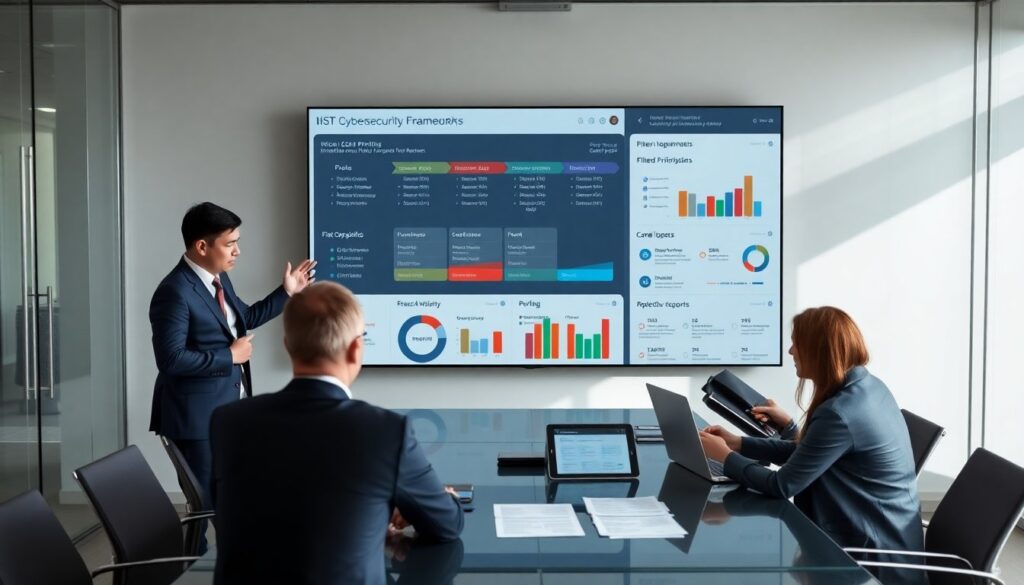
nist cybersecurity framework cybersecurity posture oneframework guides teams to measure and improve security. The article explains what the NIST Cybersecurity Framework covers. It shows how teams measure posture, find gaps, and use OneFramework to act. The reader will get clear steps to assess, plan, and monitor controls.
Key Takeaways
- The NIST Cybersecurity Framework guides organizations through five core functions—Identify, Protect, Detect, Respond, and Recover—to build a comprehensive cybersecurity posture.
- Measuring cybersecurity posture effectively requires combining metrics, maturity levels, and risk prioritization to identify gaps and focus remediation efforts.
- Many organizations miss critical gaps by treating the NIST CSF as a checklist, but OneFramework links controls, evidence, and tests to improve validation and reporting.
- OneFramework maps NIST CSF controls to existing tools and data, automates evidence collection, and provides a unified posture score to enhance visibility and decision making.
- Using OneFramework, teams can conduct practical gap analyses, prioritize controls aligned with business risk appetite, and build actionable roadmaps for cybersecurity improvements.
- Continuous measurement and iteration, supported by automated evidence checks and reporting in OneFramework, transform cybersecurity management into an ongoing, adaptive process.
What The NIST Cybersecurity Framework Actually Covers
The NIST Cybersecurity Framework defines five core functions: Identify, Protect, Detect, Respond, and Recover. Each function breaks into categories and subcategories that describe specific outcomes. Organizations map assets, risks, and policies within Identify. They apply access controls, data protection, and endpoint defenses under Protect. They deploy logging and detection tools under Detect. They build incident response processes under Respond. They restore operations and lessons learned under Recover. The framework guides risk-based choices. Teams use profiles to state current and target states. OneFramework can host those profiles and store mapping data.
Measuring Cybersecurity Posture: Metrics, Maturity, And Risk Prioritization
A clear measurement model uses metrics, maturity levels, and risk scores. Teams collect quantitative metrics such as mean time to detect, patch rate, and percentage of assets inventoried. They assign maturity levels to each category and subcategory. They score risk by likelihood and impact and rank controls by return on effort. Reporting shows trends and control gaps. Dashboards turn metrics into decisions. The NIST Cybersecurity Framework supports both qualitative and quantitative measures. OneFramework integrates metric collection and maturity scoring to create a live posture view. That view helps leaders prioritize funding and remediation.
Common Gaps Organizations Miss When Using The NIST CSF
Many teams treat the framework as a checklist rather than a decision tool. They document controls but fail to measure effectiveness. They miss asset context and critical business processes. They overlook supply chain and third-party risk. They set policies but skip validation and testing. They lack repeatable data for maturity scoring. They delay incident simulation and recovery exercises. They fail to connect risk appetite to control prioritization. OneFramework addresses these gaps by linking inventory, evidence, and test results to each CSF control. That link makes audit and reporting simpler.
How OneFramework Maps To NIST CSF Controls And Improves Visibility
OneFramework maps NIST CSF controls to existing controls, tools, and evidence. The platform captures control status, owner, and supporting artifacts. Users view a consolidated control map and filter by function or risk. OneFramework ingests scanning results, ticketing data, and policy documents. It correlates that data to produce a single posture score. It automates control evidence collection and reduces manual work. It produces exportable reports for auditors and executives. It also supports custom mappings for industry or regulatory needs.
Assess: Conduct A Practical Gap Analysis Using NIST And OneFramework
OneFramework collects baseline data for each CSF subcategory. It compares current control status to a chosen target profile. It highlights missing controls and low-evidence items. The team reviews the gap list and assigns owners. They estimate effort and risk reduction for each gap. They use a simple scoring model to rank gaps. The output becomes an actionable backlog with clear priorities.
Plan & Carry out: Prioritize Controls And Build A Roadmap
Teams select high-impact, low-effort controls first. They align control work to business priorities and risk appetite. OneFramework groups related tasks into projects and tracks progress. Teams define milestones, assign owners, and set acceptance criteria. They deploy controls, capture evidence, and update the posture view. The roadmap focuses on continuous delivery of measurable improvements. It keeps executives informed with periodic score updates.
Monitor & Iterate: Continuous Measurement, Reporting, And Improvement
Teams schedule regular metric collection and control reviews. They run tabletop exercises and technical tests to validate controls. OneFramework automates recurring evidence checks and raises exceptions when evidence fails. Teams update maturity scores after each review. They adjust the roadmap when risk or business needs change. Reporting shows trend lines and control-level detail for stakeholders. Continuous measurement turns one-off projects into lasting improvements.