Oneframework 6 ways technology affects your sleep health shows common tech habits that reduce sleep quality. The guide lists six clear links between devices and poor rest. It explains an interactive tool for geography enthusiasts oneframework, causes and gives fixes that readers can test tonight. The tone stays practical and direct. The article helps people spot problems and apply small changes for better sleep.
Key Takeaways
- Technology affects your sleep health mainly through blue light from screens that delays melatonin production and sleep onset.
- Engaging with stimulating content late at night reduces sleep drive, leading to shorter sleep and tired mornings.
- Notifications and social media increase mental alertness and cause fragmented sleep, harming mood and memory.
- Wearables and bedroom tech can cause anxiety and environmental disturbances that impair deep, continuous sleep.
- Applying oneframework strategies like setting device-free evenings, limiting stimulating content, and minimizing bedroom tech use improves sleep quality.
- Small, consistent changes guided by oneframework can help reverse tech-related sleep problems and restore healthy rest patterns.
Screens, Blue Light, And Circadian Misalignment (Ways 1–2)
Way 1: Screen light shifts circadian timing. Bright screens emit blue light. Blue light tells the brain that it is daytime. The brain reduces melatonin production when it detects blue light. Reduced melatonin delays sleep onset. People who use phones and tablets before bed fall asleep later. They then sleep fewer hours.
Way 2: Late-night content changes sleep pressure. Engaging content raises alertness. Alertness reduces sleep drive. People scroll social feeds or watch videos and feel more awake. They postpone sleep and shorten total sleep time. They then wake tired.
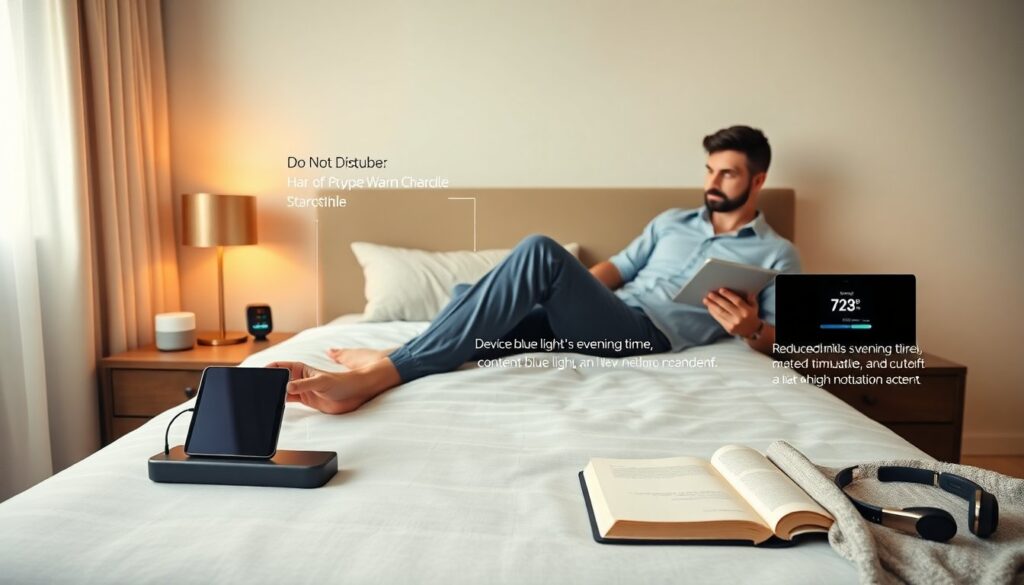
Practical note: They can lower screen impact by reducing light and content. They can set screens to warm color two hours before bed. They can lower screen brightness and use night mode. They can stop video and social sessions one hour before bed. They can shift to low-stimulation activities like reading a paper book or listening to calm audio. These steps help melatonin rise on schedule and restore sleep timing.
Integration with oneframework 6 ways technology affects your sleep health: The first two ways focus on light and content. OneFramework recommends clear, timed rules for device use. A rule might state: no screens after 9 p.m. A rule might state: use warm screen settings after sunset. Clear rules reduce late-night exposure and protect circadian rhythm.
Notifications, Social Media, And Mental Hyperarousal (Ways 3–4)
Way 3: Notifications provoke micro-awakenings. A buzzing phone creates a startle response. People check alerts and then struggle to re-enter sleep. Repeated checks fragment sleep and reduce deep sleep. Fragmented sleep harms mood and memory.
Way 4: Social media fuels worry and rumination. People compare themselves and replay posts. Rumination raises heart rate and cognitive arousal. The brain then finds it harder to relax. People who ruminate fall asleep more slowly and wake more during the night.
Fixes for notifications: They can enable do-not-disturb during sleep hours. They can silence nonessential apps. They can place phones in another room. These actions reduce sleep fragmentation.
Fixes for social media: They can set a content cutoff one hour before bed. They can switch to passive, calming content after the cutoff. They can use app timers to limit evening use. These actions reduce mental arousal.
Integration with oneframework 6 ways technology affects your sleep health: The third and fourth ways target behavior and attention. OneFramework suggests creating evening habits that reduce alerting inputs. The framework also suggests designating a charging station outside the bedroom. This practice removes temptation and lowers the chance of night checks.
Wearables, Bedroom Tech, And Practical OneFramework Strategies To Protect Your Sleep (Ways 5–6 + Fixes)
Way 5: Wearables can create anxiety about sleep metrics. Many devices show sleep stages and scores. People then watch the numbers and worry if they see poor scores. Worry leads to less sleep and a cycle of poor rest.
Way 6: Bedroom tech can compromise environment quality. Smart lights, speakers, and thermostats can emit light or sound. They can also prompt late interactions. These inputs can prevent deep, continuous sleep.
Fixes for wearables: They can use wearables as coaching tools instead of strict judges. They can view weekly trends rather than nightly scores. They can turn off nonessential alerts from sleep apps. These habits reduce metric-related anxiety.
Fixes for bedroom tech: They can set lights to fully off during sleep hours. They can disable screens on smart devices at night. They can set thermostats to a stable nighttime temperature or use a cooling sleep mattress topper. They can mute voice assistants during sleep hours. These steps protect the sleep environment and reduce disturbance.
OneFramework strategy summary: The framework combines simple rules and environmental controls. It recommends three actions: schedule device-free evening time, limit stimulating content, and set bedroom tech to minimal mode. It advises people to test one change per week. Small, consistent changes show clear sleep gains over weeks. Applying these steps helps readers reverse the six ways technology undermines rest and regain reliable sleep.